OEM & Integrator Program
Build on BluCloud. Skip the cellular stack.
A proven cellular IoT board and cloud platform, ready for your sensor, your product, and your customers.
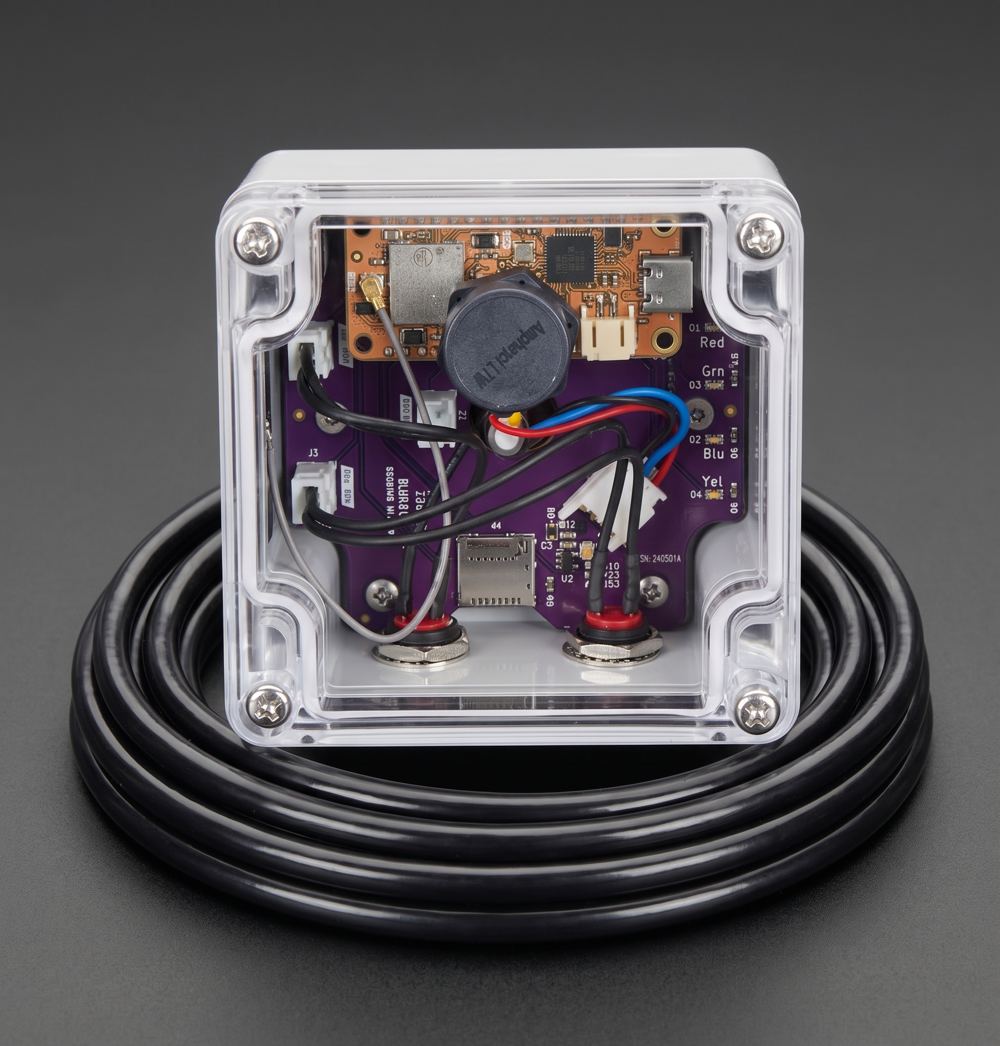
A proven cellular IoT board and cloud platform, ready for your sensor, your product, and your customers.
Your expertise is the sensor and the application. Cellular IoT is a separate engineering discipline — and each piece has to work together.
Modem, antenna, and low-power design that survives outdoors.
SIMs, carrier agreements, and coverage across regions.
Radio and carrier approvals before you can sell.
Sleep modes, sensor power-gating, OTA updates, local buffering.
Ingest, storage, dashboards, calibration, and notifications.
Pair the BluCloud unit with your own 0–5 V or 4–20 mA sensor. Your instrument, our cellular link and cloud — no hardware changes, no custom firmware.
Shape behavior from the platform: calibration formulas to your engineering units, sampling and check-in intervals, alert thresholds and routing, and connectivity plan.
Custom hardware and firmware configurations, including electronics-only delivery, for products that need their own form factor or behavior.
| Sensor inputs | 0–5 V DC · 4–20 mA loop · MODBUS RTU / RS-485 coming soon |
| Sensor power | Supplied through the cable, energized only during readings |
| Sampling | User-configurable, sub-second to daily |
| Local storage | SD card; readings sync on reconnect |
| Power | 9,000 mAh field-replaceable battery · customer LiPo · external DC / solar · USB-C |
| Sleep current | <10 µA system |
| I/O & status | 2 external switch connections · 4-color diagnostic LEDs · tap-to-transmit |
| Enclosure | IP65 polycarbonate, UL NEMA 4X · 3.2 × 3.1 × 2.1 in |
| Environment | −40 to +85 °C · OTA firmware & remote configuration |
Every device lands in a ready platform. Shape it for your product and push events into your own systems.
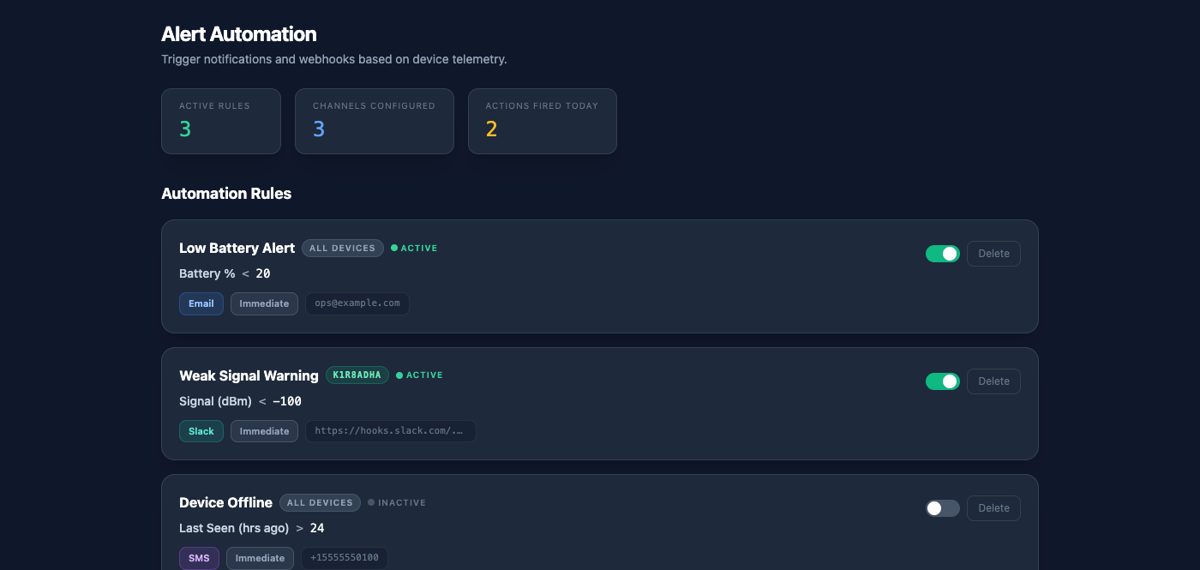
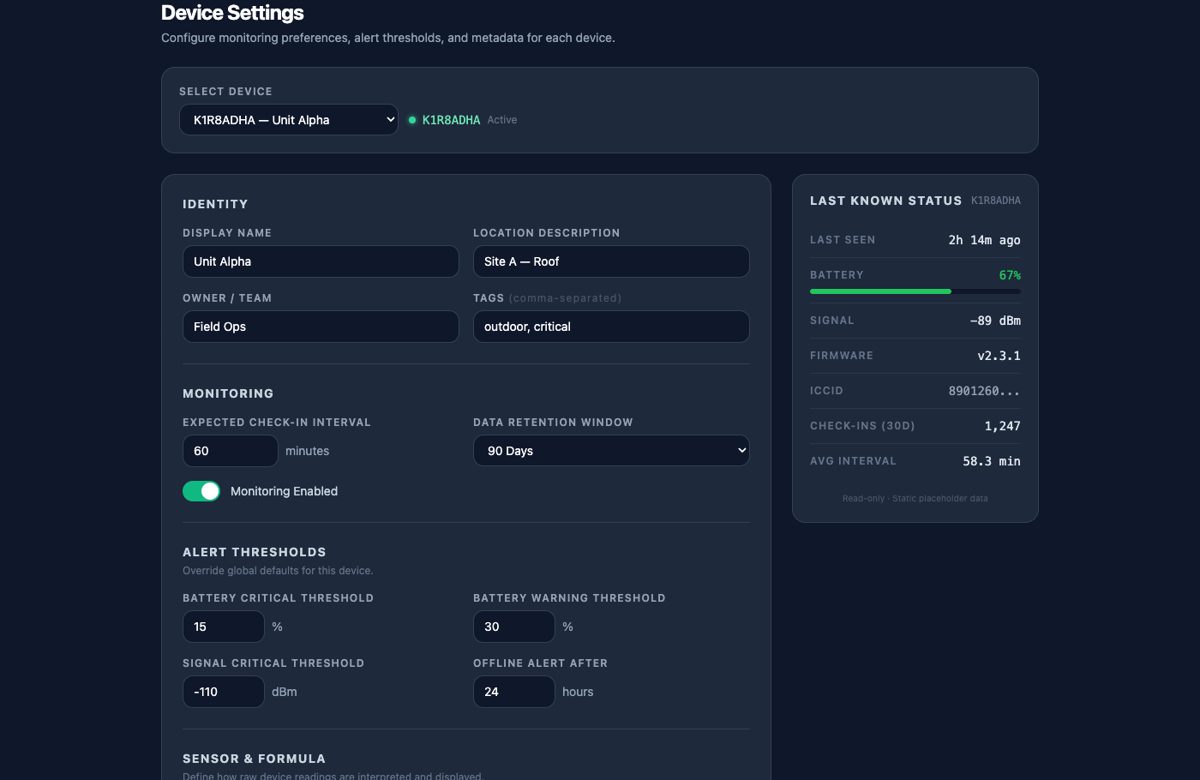
Pair your probe or transducer with the BluCloud unit and sell a complete remote-monitoring product.
Give an existing 0–5 V or 4–20 mA instrument a built-in cellular link and cloud, without designing the radio.
Upgrade legacy data loggers and wired SCADA endpoints to cellular for customers who don't want to replace sensors.
Level, pressure, flow, temperature, and environmental sensors — smart-instrument support arrives with MODBUS RTU / RS-485 coming soon
Walk through your sensor, power, environment, and where the data needs to go.
Connect your sensor to an evaluation unit and see live readings on the platform.
Configure calibration, alerts, and integrations — and scope any hardware or firmware changes.
Validate in the field, then move to production volumes.
Three layers: the cellular board and sensor interface, multi-carrier cellular connectivity, and the cloud platform with alerting. Use them together, or tell us where your product starts and ends and we'll scope what fits.
Alert rules in the platform can post to a webhook endpoint, alongside email, SMS, and Slack. If you need a different integration path, tell us the requirement and we'll scope it with engineering.
Yes. Connect any compatible 0–5 V or 4–20 mA sensor today. MODBUS RTU / RS-485 support for smart and multiparameter instruments is coming soon.
Custom hardware and firmware configurations, including electronics-only delivery, are available as a scoped engagement for products that need their own form factor or behavior.
Units ship with an embedded multi-carrier SIM covering 550+ networks across 190+ countries, so you don't negotiate carrier agreements. Plans are available for the US, Canada, or Global, with custom options.
Scope your sensor, power, and environment with us, connect your sensor to an evaluation unit, and see live readings on the platform. Terms and pricing are discussed directly.
Share your sensor, your environment, and where the data needs to go. We'll tell you how BluCloud fits.