For Direct Customers
Know the level at every site — without driving to it.
BluCloud replaces manual readings and stale loggers with real-time cellular monitoring for wells, tanks, reservoirs, sumps, and process equipment.
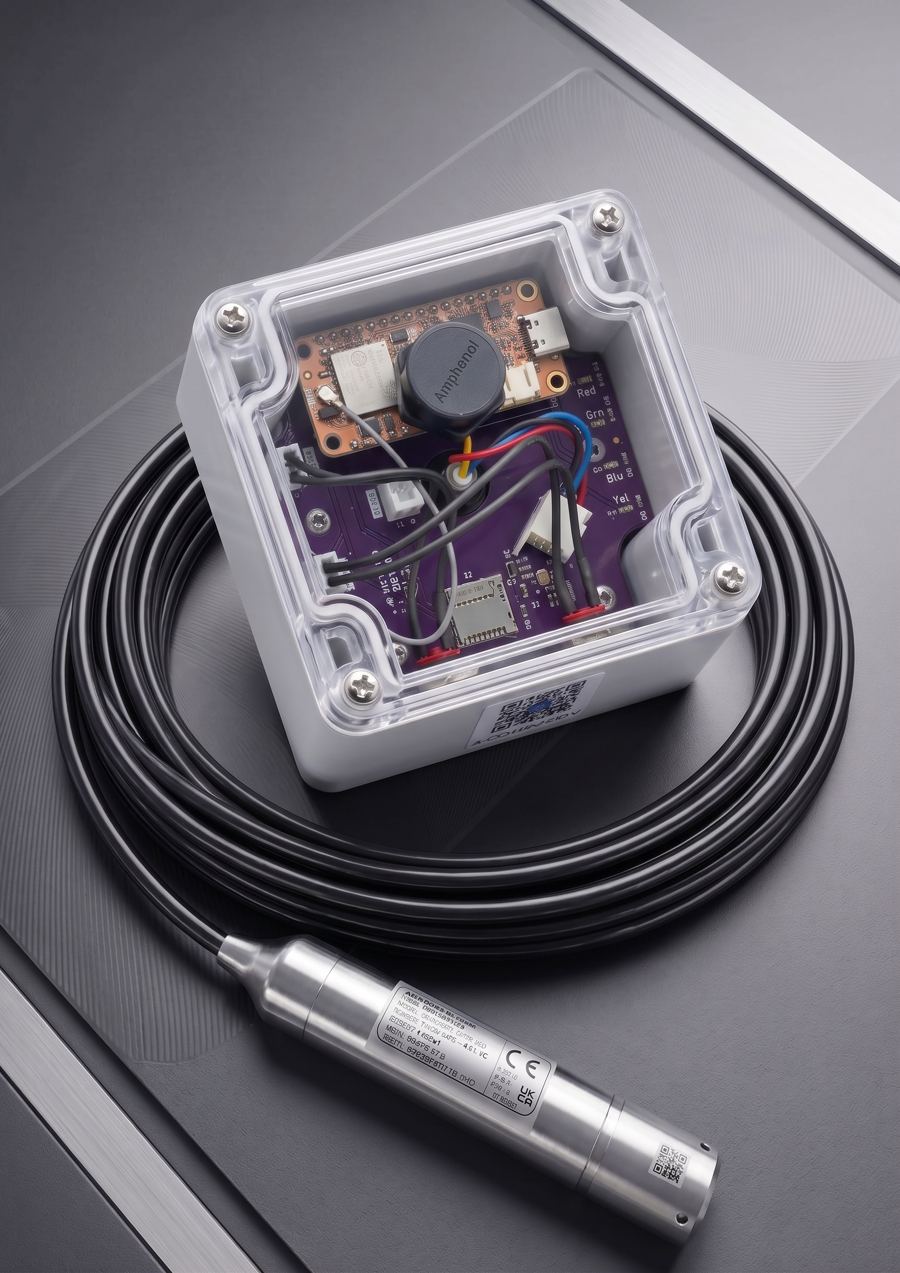
BluCloud replaces manual readings and stale loggers with real-time cellular monitoring for wells, tanks, reservoirs, sumps, and process equipment.
Municipal wells, reservoirs, storage tanks, and drinking-water supply infrastructure.
Typical setup: Environmental or Deep Well probe
Lift stations, sumps, and tanks holding aggressive or contaminated media.
Typical setup: Chemical-Resistant probe
Groundwater monitoring wells, rivers, stormwater channels, and borehole water tables.
Typical setup: Deep Well Absolute or Environmental probe
Irrigation wells, stock tanks, ponds, and agricultural water management — plus soil sensors.
Typical setup: Deep Well probe, or your own sensor
Remote tank levels, produced water, dewatering, and site water monitoring.
Typical setup: Gateway with your instrument, or a probe
Chemical tanks and process lines — any 4–20 mA or 0–5 V instrument, retrofitted to cellular.
Typical setup: Industrial Sensor Gateway
| Your situation | Start with | Why |
|---|---|---|
| I need to monitor a well, tank, or reservoir and have no sensor yet | Remote Level Monitor | The unit plus a matched submersible probe — one kit, ready to deploy. |
| I already own a 0–5 V or 4–20 mA sensor | Cellular Monitoring Unit | Adds cellular reporting and cloud to the instrument you already have. |
| I have legacy data loggers or wired SCADA endpoints | Industrial Sensor Gateway | A drop-in cellular upgrade — no need to replace the sensor. |
| The liquid is corrosive or contaminated | Chemical-Resistant probe | All-ceramic sensing with no fill fluid and no metal contact with the media. |
| It's a deep, permanent monitoring well | Deep Well Absolute probe | Sealed cable — no vent tube to clog over years of deployment. |
Application, liquid, depth, and how often you need data.
Probe type, range, output, cable length, and connectivity plan — set up before it ships.
Lower the probe, mount the unit, tap to send a test reading.
Review the data together, tune alerts, and expand to more sites.
Accuracy depends on the probe and the range you select. BluCloud level probes are specified at ±0.2% of range typical (±0.1% on the Environmental probe) and ±0.5% max, so choosing a range close to your expected maximum depth gives the best result.
Sampling is user-configurable from sub-second to daily, and reporting intervals run from hourly to daily. Both can be changed remotely from the dashboard. Longer intervals extend battery life.
No. The probe is powered by the BluCloud unit through its cable, and is energized only while a reading is taken. The unit's default battery is a 9,000 mAh field-replaceable cell with a 3–5+ year target life.
The unit operates from −40 to +85 °C. The submersible probes are IP68 and rated for liquid temperatures from −10 to +70 °C.
Yes. The Cellular Monitoring Unit and Industrial Sensor Gateway accept any compatible 0–5 V or 4–20 mA sensor — pressure, flow, temperature, soil moisture, and more.
The unit logs readings to an on-board SD card and syncs them when service returns. Because it selects the strongest of 550+ networks automatically, many sites that lack coverage from one carrier still connect on another.
Request a pilot: tell us about one site (application, liquid, depth, and how often you need data) and we'll configure a kit for it. Most people start with a single well or tank and expand once they've seen the data.
Tell us about one well, tank, or reservoir. We'll help you scope a pilot.